IoT and hardware interfaces
Devices are full of dials: thermostats, fan speeds, fuel and battery levels, valve positions. The quantities are continuous and bounded, so a radial control matches how people think of the thing. Orbit gives you those controls as HTML that any framework, or none, can update from a WebSocket or MQTT message.
Where it fits
- Smart-home panels and cards that should look the same across platforms.
- Companion apps for devices with a knob or a gauge of their own: e-bikes, printers, brewing controllers.
- Device screens prototyped in HTML, then shipped in a web view.
- Live telemetry: one attribute or custom property per message, redrawn on the next frame.
Where it does not
- Old embedded browsers. Orbit needs container query units and CSS
sin()andcos(). - Illustrated, branded controls. Draw the illustration and put an Orbit gauge on top for the values.
Start from
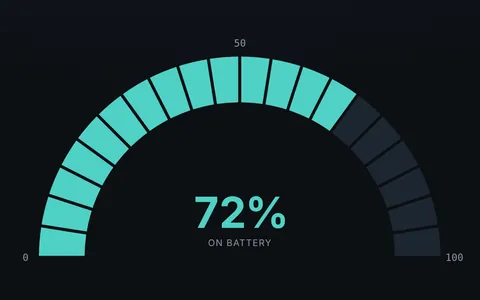 Half gaugeA battery in 20 cells on a half circle.
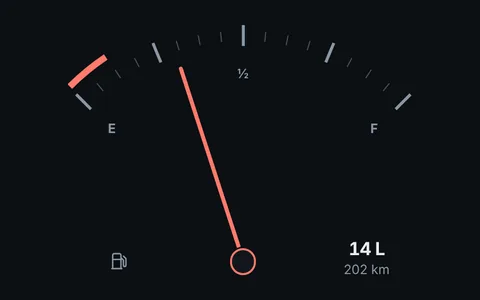 Fuel gaugeA compact level instrument.
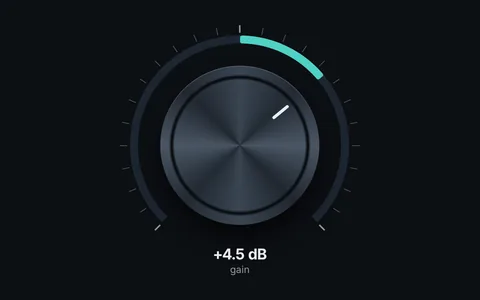 Knob with progress barA setpoint control.
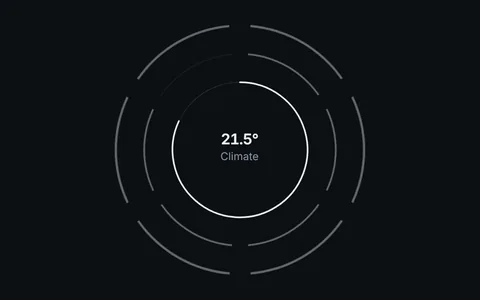 Layered status ringsSeveral channels in one object; alerts come to the front.
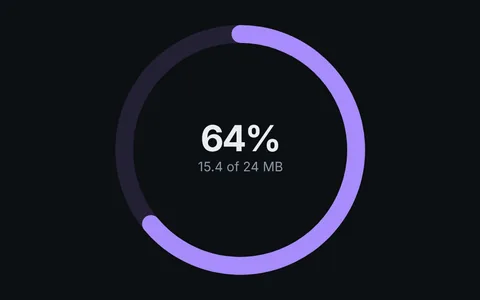 Progress with backgroundBattery, fill level, filter life.
A thermostat screen could be a large temperature gauge, a knob for the setpoint and two small rings for humidity and filter life. The Kit instrument and gauge are good starting points.